Last updated 2026-07-25
TL;DR
Form 990 is the annual information return most tax-exempt organizations file with the IRS. Which version you file (990-N, 990-EZ, 990, or 990-PF) depends on gross receipts and assets. Miss the deadline three years running and the IRS auto-revokes your exempt status, no warning letter required.
What is Form 990?
Form 990 is the annual information return that tax-exempt organizations file with the IRS to report income, spending, and activities. It is not a tax bill in most cases. Nonprofits that are recognized as tax-exempt under section 501(c) generally don't owe income tax on money related to their exempt purpose, so the 990 exists mostly to keep the IRS (and the public) informed about what the organization is doing with its money. The IRS describes it plainly: organizations exempt from income tax under section 501(a) "must file an annual information return" and the 990 series is that return [1]. Think of it as a financial and operational report card, not a payment voucher. There are four main versions, and which one your booster club, PTO, or youth sports league files depends almost entirely on how much money moved through the org that year. A small parent group running bake sales files a completely different form than a regional soccer league with a paid director and $300,000 in gate receipts. Here's the thing new treasurers get wrong constantly: even if your group has zero income tax to pay, you still have to file something every single year. There's no minimum threshold that lets you skip filing entirely. The smallest orgs get a very simple form, but "simple" is not "optional."
Which Form 990 does my organization file?
| Normally $50,000 or less | any | Form 990-N (e-Postcard) | |
|---|---|---|---|
| Less than $200,000 | Less than $500,000 | Form 990-EZ (or full 990) | |
| $200,000 or more | any | Form 990 (full) | |
| Any private foundation | any | Form 990-PF | Most booster clubs, PTOs, and small youth sports leagues land in the 990-N bucket. If your group's average gross receipts over the last three years are $50,000 or less, you qualify for the 990-N, which the IRS calls the e-Postcard. It only asks for basics: your EIN, tax year, legal name, address, confirmation you're still under the $50,000 threshold, and a statement that you haven't terminated [1]. If you're between $50,000 and $200,000 in gross receipts (and under $500,000 in assets), you can usually file the 990-EZ, a shorter version of the full return. Cross $200,000 in receipts or $500,000 in assets and you're required to file the full Form 990, which asks for a lot more: compensation of officers, a functional expense breakdown, governance policies, and more. One wrinkle: even if you qualify for the 990-N based on receipts, you can always choose to file the 990-EZ or full 990 voluntarily. Some organizations do this because a grantor or bank wants to see a fuller financial picture. It's rare for a small booster club to need this, but it happens. |
The version you file depends on gross receipts and total assets for the tax year. Here's the breakdown from the IRS's own filing thresholds [2]: | Gross receipts | Total assets | Form required |
What is a 990 tax form, exactly, and who has to file it?
A 990 tax form is the IRS's mechanism for tax-exempt organizations to self-report their finances annually, and it applies to nearly every organization recognized under section 501(c), more than the well-known 501(c)(3) charities. That includes 501(c)(4) social welfare orgs, 501(c)(6) trade associations, and 501(c)(7) social clubs, among others. A narrow set of organizations are excused from filing at all: churches, their integrated auxiliaries, and conventions or associations of churches are generally not required to file an annual return [3]. Most booster clubs and PTOs don't fall into that exception, so if you're reading this because you just inherited a shoebox of receipts from last year's treasurer, assume you need to file something. Here's a distinction that trips people up: filing a 990 is not the same as applying for tax-exempt status. Recognition of exemption comes from Form 1023 or 1024 (or, for smaller orgs, the streamlined 1023-EZ). The 990 is what you file every year after you already have that status, to stay in good standing. If your booster club has never formally applied for 501(c)(3) recognition, filing a 990 doesn't fix that; you may be operating as an unrecognized nonprofit, which is a separate problem worth sorting out with the IRS directly. A quick gut check for a brand-new treasurer: pull up your group's EIN on the IRS Tax Exempt Organization Search tool. If it shows a 501(c) subsection and recent 990 filings, you're in the system. If it shows nothing or shows "revoked," that's a bigger conversation, covered below.
What happens if we don't file Form 990 for a few years?
If a tax-exempt organization fails to file any required 990-series return for three consecutive years, the IRS automatically revokes its tax-exempt status. This is not a discretionary IRS decision and there's no warning letter that says "last chance." The law itself, Internal Revenue Code section 6033(j), states that failure to file for three consecutive years results in revocation "as of the filing due date of the third annual return" [4]. This catches an enormous number of small nonprofits. The IRS's own guidance notes that most organizations losing exemption this way are small ones that didn't realize they had a filing obligation in the first place, often because a volunteer treasurer rotated out and nobody picked up the paperwork [5]. Once revoked, your organization shows up on the IRS's Auto-Revocation List, donations made to it are no longer tax-deductible to the donor, and (depending on your state) you may lose state tax exemptions and charitable registration standing too. You'll also likely owe federal income tax on any net income for the years you were not exempt, and you may need to file Form 1120 or 1120-H for those gap years. Getting reinstated involves filing Form 1023 (or 1024) again, along with any past-due 990s, and paying the applicable user fee. Smaller organizations can sometimes use a streamlined retroactive reinstatement process if they apply within 15 months of the revocation date and meet the criteria in Rev. Proc. 2014-11 [6]. If you're past that window, reinstatement is still possible, it's just a longer road with no guarantee the IRS grants retroactive relief back to the revocation date.
When is Form 990 due?
Form 990 (in any version) is due on the 15th day of the 5th month after your organization's accounting period ends. For a group on a calendar fiscal year (ending December 31), that's May 15 of the following year [7]. For a group on a July 1 to June 30 fiscal year, common for schools and booster clubs tied to a school calendar, the due date is November 15. Extensions are available. Filing Form 8868 gets you an automatic 6-month extension, no explanation required [2]. That moves a May 15 deadline to November 15, for example. There's no penalty for requesting the extension itself; you just have to file the actual return by the extended date. Missing the deadline once doesn't trigger revocation. It's missing three years of consecutive required filings that does it, as covered above. But late filing penalties can still apply for the 990-EZ and full 990 (990-N has no late filing penalty because there's nothing financial to calculate, though failure to file it still counts toward the three-year revocation clock). Confirm current penalty amounts with the IRS, since these figures are adjusted periodically.
What does a treasurer do?
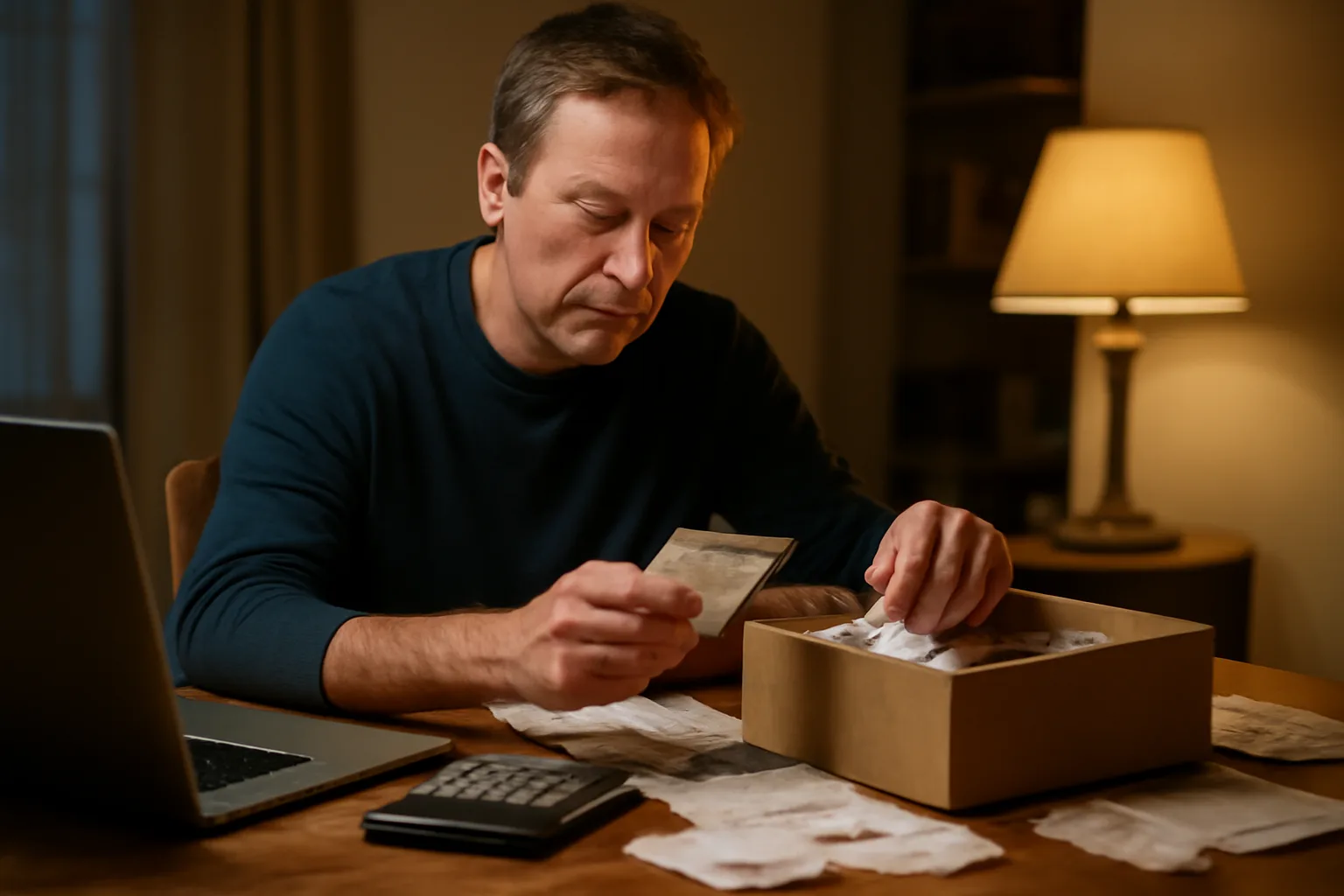
A treasurer is the person responsible for tracking, safeguarding, and reporting an organization's money, and in a volunteer nonprofit like a booster club or PTO, that job usually falls on one parent with a spreadsheet and a shoebox of receipts. The role isn't legally defined the same way everywhere, since booster clubs and PTOs are governed by their own bylaws rather than a single state statute, but the core duties are consistent across nearly every small nonprofit. What does a treasurer do, in practice? At minimum: deposit and record income (dues, concession sales, fundraiser proceeds), pay and record expenses, reconcile the bank statement monthly, keep receipts and records organized, report the financial picture to the board or membership at meetings, and make sure required tax filings, like the annual 990, actually get filed on time. What do treasurers do that people don't expect? A lot of the job is process, not math. Setting up dual signatures on the bank account. Making sure two people count the cash box after a car wash fundraiser, not one. Keeping a simple ledger that the next treasurer can actually understand instead of a system only you know how to read. Good treasurers build handoff documentation as they go, because volunteer turnover in these roles is high and undocumented systems die with the person who built them. In a small club, what does a club treasurer do differently from a corporate finance role? Scale is the difference, not complexity of principle. A club treasurer might handle $8,000 a year instead of $8 million, but the same fundamentals apply: separate the person who approves spending from the person who writes the check where possible, keep backup documentation for every transaction, and never let one person have total, unchecked control of the money. For more on this, see treasurer basics and the 990 filing itself.
What is a treasurer of a club, formally?
Formally, a treasurer of a club is an officer position defined by the organization's own bylaws, not by state or federal law. Most nonprofit corporations statutes require that a corporation have certain officers, but they leave the specifics to the bylaws. States that have adopted versions of the Model Nonprofit Corporation Act generally require at minimum a president and a secretary-type role, and many require or strongly assume a treasurer function exists, but the exact title and duties are usually left to the organization to define in its own governing documents. What is a treasurer, boiled down to one sentence? The officer accountable for the organization's money: where it comes from, where it goes, and whether the books can prove it. What is form 990 have to do with this? Everything, honestly. The treasurer is almost always the person who either files the 990 directly or hands the numbers to whoever does (a volunteer CPA, a paid preparer, or the board president). If your bylaws don't spell out that the treasurer is responsible for the annual filing, fix that. Ambiguity here is exactly how orgs end up on the IRS Auto-Revocation List three years after a treasurer quietly stops showing up to meetings.
Can our booster club or PTO get help filing Form 990 without hiring a CPA?
Yes, for the 990-N especially. The e-Postcard is designed to be filed directly by a volunteer treasurer through the IRS's online system, no software or accountant required [1]. It takes maybe ten minutes if you have your EIN and prior-year numbers handy. The 990-EZ and full 990 are more involved. Plenty of small nonprofits complete these themselves using IRS instructions and free fillable forms, but the full 990 in particular asks for governance disclosures, functional expense allocation, and compensation reporting that benefits from someone who's done it before. If your group is new to the $200,000+ receipts range, or if last year's treasurer left incomplete records, it's worth paying a nonprofit-focused preparer for at least the first year, then handling it in-house once you understand the pattern. A lot of the actual difficulty isn't the tax form itself, it's not having clean books to pull numbers from. That's a record-keeping problem that shows up months before filing season. This is one spot where a State-Personalized Treasurer Kit helps: a $99 one-time kit built around your specific state's rules gives you the filing checklist, the recordkeeping templates, and the deadline calendar so the 990 filing is just data entry when the deadline arrives, instead of a scramble to reconstruct a year of transactions from a checkbook register.
What's the difference between Form 990, 990-EZ, 990-N, and 990-PF?
| 990-N | Gross receipts normally ≤ $50,000 | 8 basic data points, online only | Yes, searchable on IRS site | |
|---|---|---|---|---|
| 990-EZ | Receipts < $200,000, assets < $500,000 | Summary financials, program service accomplishments | Yes | |
| 990 (full) | Receipts ≥ $200,000 or assets ≥ $500,000 | Full financials, governance, compensation, schedules | Yes | |
| 990-PF | All private foundations, regardless of size | Full financials plus grant-making detail | Yes | A few notes worth knowing. Private foundations file the 990-PF no matter how small they are, there's no receipts threshold exception for them, because Congress wants closer oversight of foundation grant-making and self-dealing rules. Most booster clubs and PTOs are public charities, not private foundations, so this usually doesn't apply, but it's worth confirming your classification if you're not sure. All versions, including the 990-N, are public record. Donors, journalists, and competitors (yes, rival booster clubs do look) can pull your filings through the IRS's search tool or through sites like ProPublica's Nonprofit Explorer. That's by design: the 990 tax form system exists partly to give the public visibility into how tax-exempt money moves. |
All four are versions of the same annual filing requirement, scaled to organization size and type. Here's a quick comparison: | Form | Who files it | Info required | Public disclosure |
How do we know our filing threshold if our income varies year to year?
The IRS uses an average, not a single year's number. For 990-N eligibility specifically, the standard is whether gross receipts are "normally $50,000 or less," and the IRS defines "normally" using a rolling average over the current year and the two years before it [8]. So a booster club that had a huge one-time fundraiser (a gala, a big raffle) in one year isn't automatically bumped into a higher filing tier if the average across three years stays under the threshold. The exact averaging rule depends on how long your organization has been in existence: orgs in their first tax year use just that year's receipts, orgs in their first two years average those two years, and orgs three years or older use the average of the current year and the prior two . If your club is brand new, use your first year's actual number. If you're established, run the three-year average before assuming which form applies. This matters because guessing wrong has consequences in both directions. File a 990-N when you actually needed a full 990, and the IRS can treat that as a failure to file the correct return, which still counts toward the three-year revocation clock. File a full 990 when a 990-N would've done, and you've just spent hours on paperwork you didn't need to do.
Does filing Form 990 mean we owe income tax?
Usually not, for the activities related to your exempt purpose. A 501(c)(3) booster club running bake sales and concession stands to fund the marching band isn't paying federal income tax on that money, assuming the activity is substantially related to the exempt purpose and the org keeps its tax-exempt status current. Where it gets more complicated is unrelated business income. If your organization runs an activity that's regularly carried on and not substantially related to your exempt purpose, like renting out space for unrelated commercial use, that income can be subject to Unrelated Business Income Tax (UBIT), reported separately on Form 990-T . Most small booster clubs and PTOs never trigger this, but it's worth knowing the concept exists so you're not blindsided if your group starts something like a year-round retail operation unrelated to the team or school. The bottom line: the 990 itself is an information return, not a tax bill, for the vast majority of small nonprofits. But it's the document the IRS uses to check whether you should owe tax on anything, so accuracy matters even without a check attached.
What should a new treasurer check first when taking over the books?
Before worrying about this year's filing, figure out whether last year's filing actually happened. Pull up your EIN on the IRS Tax Exempt Organization Search and confirm your organization's exempt status is current, not revoked, and check the filed 990s listed [1]. This takes five minutes and it's the single most important check a new treasurer can do, because it tells you whether you're inheriting a clean situation or a multi-year mess. Next, confirm which form your org should be filing based on the three-year average discussed above, and find out who filed it last year (a board member, an outside preparer, nobody). Then locate or rebuild the prior year's financial records: bank statements, the fundraiser income, the expense receipts. You can't file an accurate 990 without them, and if the prior treasurer didn't keep clean records, budget real time for reconstruction. Finally, check your state requirements separately from the federal 990. Many states require charitable organizations to register with the state attorney general's office or a dedicated charity registration division, and some require an annual state financial report in addition to the federal filing. This is a completely separate obligation from the IRS 990, and it's easy for a new treasurer to handle the federal side and forget the state side exists. Confirm with your state charity office what, if anything, your organization needs to file there.
Frequently asked questions
What is Form 990 in simple terms?
Form 990 is the annual report tax-exempt organizations file with the IRS showing income, expenses, and activities for the year. It's not a tax bill for most groups; it's an information filing that keeps your tax-exempt status active and gives the public visibility into your finances. Nearly every 501(c) organization, including small booster clubs and PTOs, must file some version yearly.
What does a treasurer do in a booster club or PTO?
A treasurer tracks all money coming in and going out, reconciles the bank account monthly, keeps receipts and records organized, reports finances to the board, and makes sure the annual IRS Form 990 gets filed on time. In practice, it's less about math and more about keeping a clean, provable paper trail someone else could follow later.
What is a 990 tax form and do we really have to file it every year?
Yes, every year, with no exceptions for small size. A 990 tax form is the annual information return nearly all tax-exempt organizations file with the IRS. Even the smallest groups filing the simple 990-N e-Postcard must submit it annually; skipping it for three straight years triggers automatic revocation of tax-exempt status under IRC section 6033(j).
Which Form 990 should our organization file?
It depends on gross receipts and total assets. Under $50,000 in average gross receipts: file Form 990-N. Under $200,000 receipts and $500,000 assets: 990-EZ. At or above $200,000 receipts: full Form 990. All private foundations file Form 990-PF regardless of size. Confirm your exact figures against current IRS thresholds before choosing.
What happens if we forget to file Form 990 for a few years?
One missed year usually isn't fatal, though penalties can apply for the 990-EZ or full 990. But missing three consecutive years of required filings triggers automatic revocation of tax-exempt status under IRC section 6033(j), with no warning notice required. Reinstatement means reapplying with Form 1023 or 1024 and filing all past-due returns.
What is a treasurer of a club responsible for?
A club treasurer's exact duties come from the organization's own bylaws, not a single state law, but almost universally include recording income and expenses, reconciling accounts, reporting to the board, and ensuring required tax filings happen. Many clubs also make the treasurer responsible for internal controls like dual signatures on the bank account.
Do small booster clubs really need to file anything with the IRS?
Yes. Even a tiny booster club with under $50,000 in annual receipts must file Form 990-N, the e-Postcard, every year. It only takes about ten minutes online and asks for basic information: EIN, legal name, address, and confirmation you're under the receipts threshold. Skipping it repeatedly leads to automatic loss of tax-exempt status.
Is Form 990 the same as applying for tax-exempt status?
No. Applying for tax-exempt status uses Form 1023 or 1024 (or the streamlined 1023-EZ), a one-time application reviewed by the IRS. Form 990 is the annual return filed every year afterward to maintain that status. Filing a 990 doesn't grant exemption if your organization never formally applied and was recognized.
When is our organization's Form 990 due?
The 15th day of the 5th month after your fiscal year ends. Calendar-year organizations (year ending December 31) file by May 15. Organizations on a July-to-June fiscal year, common for school-linked groups, file by November 15. Filing Form 8868 grants an automatic six-month extension with no explanation needed.
Does our state also require a separate nonprofit filing?
Often, yes, and it's separate from the federal 990. Many states require charitable organizations to register with the attorney general's office or a state charity division and file annual financial reports there. Requirements vary widely by state, so confirm directly with your state charity registration office what your organization owes beyond the IRS filing.
Can a volunteer treasurer file Form 990-N without a CPA?
Yes. The 990-N e-Postcard is built for self-filing directly through the IRS's online system, requiring only eight basic data points and roughly ten minutes if you have your EIN and prior figures ready. The fuller 990-EZ and 990 involve more disclosure and often benefit from professional help, at least the first year.
What is the 990 used for by the public?
Because all versions of the 990 are public record, donors, grant-makers, journalists, and watchdog groups use them to check how a nonprofit spends its money, who's compensated, and whether the organization is still active and in good standing. Anyone can search filings through the IRS's Tax Exempt Organization Search tool.
Sources
- IRS, Which forms do exempt organizations file: filing thresholds for 990-N, 990-EZ, full 990, and 990-PF
- IRS, Annual Electronic Filing Requirement for Small Exempt Organizations Form 990-N: 990-N required information and online filing process for orgs with receipts normally $50,000 or less
- 26 U.S.C. section 6033(j): automatic revocation of exempt status after three consecutive years of failing to file required returns
- IRS, Automatic Revocation of Exemption: automatic revocation applies broadly and most affected organizations are small filers
- IRS, Revenue Procedure 2014-11: streamlined retroactive reinstatement process for small organizations applying within 15 months of revocation
- IRS, Form 990 Instructions: Form 990 due date is the 15th day of the 5th month after the accounting period ends
- IRS, About Form 8868: Form 8868 provides an automatic 6-month filing extension
- IRS, Unrelated Business Income Tax: unrelated business income not substantially related to exempt purpose is reported on Form 990-T and may be taxable